The Systematic Decay of Meta
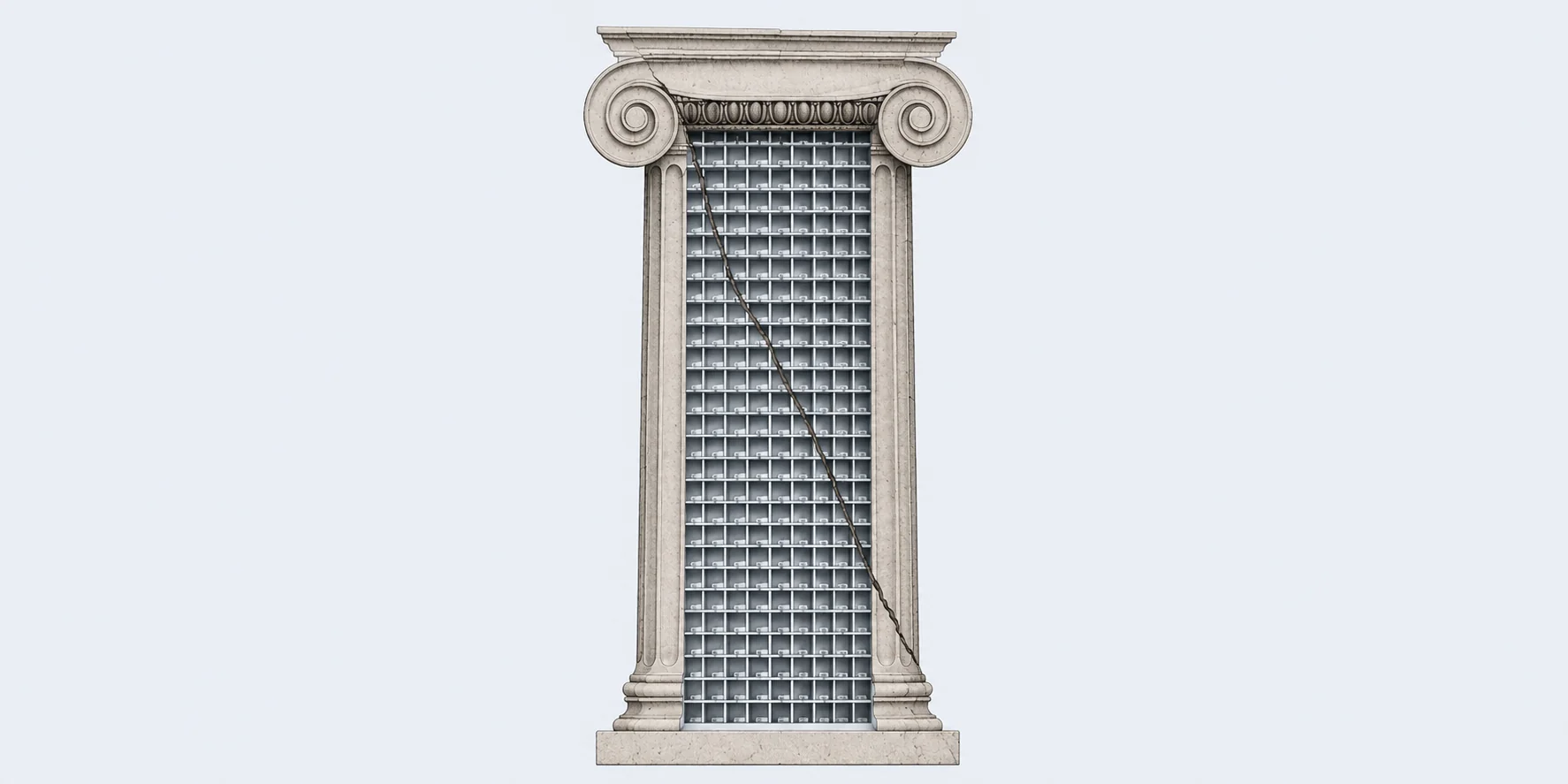
Please read Gergely Orosz’s (pragmatic engineer’s) recent reporting on Meta if you haven’t yet, this is a response to the shift in Meta’s engineering culture.
Meta has been in the news for rounds and rounds of layoffs and has struggled to find their footing for years. But despite that, they have recruited and hired the best talent that the industry has to offer.
As of this month, many engineers at Meta are being moved off teams and forced to set aside their craft to help Facebook win the LLM wars. No more feature building, just assembly lines of data labelers
I chose pretty early in my career that I didn’t want to work for big tech. I preferred leaner environments where I could own the product end to end. While I’ve navigated outside these types of organizations, I never was tempted to apply.
While I was never a part of Meta, I can’t pretend I never worked in an environment that tried to model themselves after their cultural engineering principles.
We are all familiar with the famous, ‘move fast and break things’, that evolved into ‘move fast with stable infrastructure’, ‘build, measure, learn’.. Meta along with other companies, popularized scaling experimentation in prod, platform/developer innovation, and culture as documentation. I remember when they even had a diversity commitment. The times are changing.
They were (are?) the industry leaders. I think it is appropriate to use the steps they are currently taking and the way their culture is evolving to peer into the future of software engineering.
Unfortunately right now, with the help of the pragmatic engineer’s reporting, we see decay.
When Meta decides to stop innovating, turning engineers into glorified data labelers, what does that mean for our industry?
I can’t help but have a strange reaction to this shift. Not only because I’m a software engineer who loves to innovate and tinker with ideas, but I also have a rare vantage point compared to others in tech when it comes to this pivot by Meta.
15 years ago, pre-software engineer, I was a remote data labeler for Amazon’s Mechanical Turk. While dealing with a health crisis I could only do async remote work, which at the time was labeling images for pennies to train what I now realize were early models. It was repetitive, soul-crushing, and demotivating.
Of course Meta is requiring more technical experience like spinning up docker containers, which your average person would struggle with. I can’t help but think that Meta is taking highly skilled engineers and turning them into an expensive mechanical turk worker.
From my view point, seeing these tech giants moving highly specialized engineers into virtual assembly lines feels circular. I saw the bottom 15 years ago, created a successful career for myself in tech, and now I see the industry pulling engineers back to the bottom.
There have honestly been ripples in the last few months. I have seen these $100/hr jobs offering to train data. These companies reach me out every week on LinkedIn. If I never did Mturk, I might have been tempted by that offer.
I know what I’m writing sounds like fear mongering, but shifts like this shouldn’t be met with panic. If our skill is being reduced to factory workers, we can find another path, a more sovereign path.
It reminds me of Tao Te Ching, “to be empty, is to be full”. When big tech turns their engineering departments into AI model trainers, they are unable to leave vacant spaces where innovation can breathe and expand.
For those outside of Meta, we are still builders, we are still choosing to abandon the short-term for long term vision. This vacant space is made for us to thrive, for founders and the entrepreneurs, the engineer who loves their craft. What Meta is choosing to leave behind is a vacuum for us to grow.
AI is a powerful tool but not the master of our destiny.
As for me, I will not be going back to data labeling. I still partner with companies that treat software development as an intentional craft and believe in the stewardship of stable infrastructure, to allow breathing in the space where the real building happens.